
By Akanksha Pandey
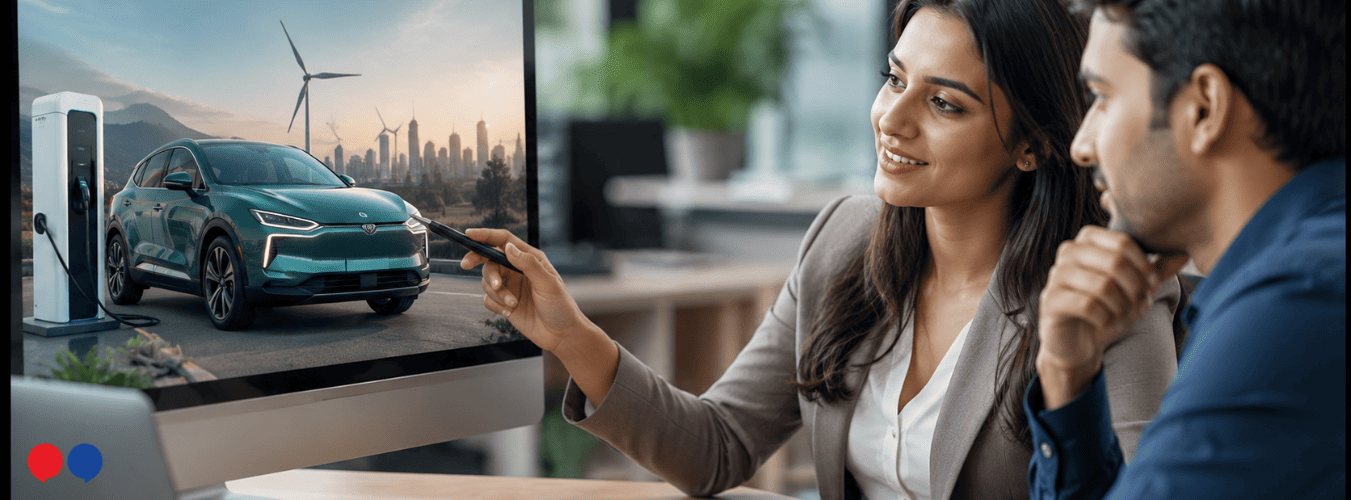
The rapid rise of electric vehicles has transformed the automotive landscape, creating a market where innovation alone is no longer enough. An effective EV digital marketing strategy has become equally important for attracting, educating and converting modern buyers. As digital marketing for the EV industry evolves, brands must understand that purchasing an electric vehicle involves extensive research, multiple online interactions and a longer decision-making process than conventional vehicles.
Very few EV purchases begin at a dealership. Most buyers spend days or even weeks reading reviews, watching videos, checking charging options and estimating ownership costs before making any decision. They move between Google, YouTube, social media, comparison platforms and dealer websites as they narrow their options. By the time they book a test drive or make an enquiry, much of the decision has already been shaped online.
Reaching buyers at each of these moments is what makes a smarter digital marketing strategy a competitive advantage for EV brands.
An effective EV digital marketing strategy recognises that buyers spend considerable time researching before making a purchase. Brands that invest in customer education, first-party data, AI in automotive marketing, performance marketing, personalised experiences and search visibility can generate stronger leads, improve conversions, strengthen customer loyalty and create sustainable long-term growth.
Conventional automotive marketing has historically relied on product specifications, dealership promotions and large-scale advertising campaigns. The EV market follows a very different buying pattern, where education and trust have become deciding factors.
Several shifts have changed electric vehicle marketing:
Unlike traditional vehicles, electric cars introduce new concepts such as battery technology, charging ecosystems and long-term savings. These considerations have fundamentally changed EV buyer behaviour, making educational content more valuable than promotional messaging.
An EV purchase is rarely an impulse decision. Every stage presents opportunities for brands to educate, engage and build confidence.
The EV customer journey usually begins online.
Most buyers first come across electric vehicles through Google, YouTube, social media, automotive websites and news platforms. Their early searches usually focus on price, battery life, charging options and driving range.
Sharing useful information at this stage helps build EV brand awareness and earns buyer confidence before they begin comparing brands.
Once awareness develops, buyers begin deeper research.
Model comparisons become more detailed at this stage. Buyers look at ownership costs, maintenance, charging options and available government incentives. Many also rely on expert opinions, owner experiences and comparison articles before narrowing their choices.
Strong digital marketing for electric vehicles ensures accurate, accessible and trustworthy information is available across every digital platform.
The consideration phase involves practical decision-making.
Buyers estimate long-term savings, check charging availability, explore financing options and often book a test drive before making a choice.
Interactive tools that simplify these decisions help build confidence throughout the EV purchase journey.
The relationship continues even after the sale.
Dealer interactions, financing support, onboarding guidance and after-sales communication all contribute to customer satisfaction. Happy customers frequently become advocates, creating referral opportunities that strengthen future EV lead generation.
A connected ownership experience also supports long-term lifecycle marketing, encouraging repeat purchases and brand loyalty.
Unlike traditional automobiles, electric vehicles require buyers to understand an entirely new ownership ecosystem. Education therefore becomes one of the strongest competitive advantages.
Useful educational content can cover:
Good educational content clears common doubts and helps buyers feel more confident. It also builds trust instead of simply promoting the brand.
A well-informed customer is more likely to progress confidently through the buying journey, resulting in higher-quality leads and stronger conversion rates.
A successful EV marketing strategy requires multiple digital channels working together throughout the customer lifecycle.
Search remains one of the most influential channels for EV buyers.
Brands should optimise content for informational, commercial and location-based searches while preparing for AI-powered search experiences through AEO and GEO optimisation.
Strong local SEO for EV brands improves discoverability for nearby dealerships while capturing high-intent search traffic.
Useful content helps brands build credibility while giving buyers the information they need to make confident decisions
Valuable resources include:
Well-planned content improves organic visibility and helps buyers find reliable answers at every stage of their purchase journey.
Not every visitor is ready to purchase immediately.
Strategic performance marketing helps identify high-intent audiences through advanced segmentation, paid search, display campaigns and remarketing. Behaviour-based targeting ensures advertising budgets focus on users with stronger purchase intent.
Social media is now a key platform where EV buyers discover brands and learn from other owners.
Successful campaigns focus on:
Authentic customer experiences often build more trust and influence buying decisions than traditional advertisements.
Digital visibility must extend beyond the national brand.
Optimised Google Business Profiles, location-specific landing pages and dealership information improve discoverability and simplify local purchasing decisions. Strong local presence supports both online research and showroom visits.
Every buyer moves through the purchase journey at a different pace.
Marketing automation helps deliver personalised emails with educational content, financing updates, test-drive reminders and ownership guidance. It keeps potential buyers engaged without sending unnecessary messages.
For many buyers, the website is where the final purchase decision takes shape.
An effective website should include:
Good conversion rate optimisation makes it easier for visitors to enquire or buy without unnecessary steps.
Artificial intelligence has fundamentally changed modern automotive digital marketing.
Instead of relying solely on broad demographic targeting, brands can now analyse behavioural patterns using first-party data collected from websites, mobile applications, CRM systems and customer interactions.
AI enables:
Brands can use these EV consumer insights to deliver personalised marketing while staying aligned with changing privacy regulations.
Many EV brands still market their vehicles the same way as conventional cars.
Common mistakes include:
Left unaddressed, these gaps can hurt the customer experience and affect marketing results over time.
The table below shows how a digital-first approach changes EV marketing outcomes.
| Traditional Marketing | Smarter EV Marketing |
| Product-focused | Education-first |
| Mass advertising | Personalised targeting |
| One-time campaigns | Lifecycle marketing |
| Basic lead generation | Qualified lead nurturing |
| Channel-based | Omnichannel marketing journey |
| Generic messaging | Data-driven personalisation |
| Dealer-led communication | Integrated brand-dealer experience |
| Lead volume focus | Lead quality and revenue focus |
The comparison shows that lasting customer relationships deliver better results than one-time campaigns.
Business results matter more than vanity metrics when evaluating success.
Key performance indicators include:
Looking at the full funnel helps identify what is working and what needs attention.
The next phase of EV marketing trends will revolve around intelligence, automation and personalisation.
Emerging developments include:
Early adoption of these innovations can strengthen customer relationships and help brands stay ahead as competition continues to grow.
As these trends continue to shape the industry, agencies like The Brand Saloon are helping EV brands adapt with data-driven strategies that keep pace with changing customer expectations.
The electric vehicle market has evolved beyond traditional automotive selling. Modern buyers expect transparency, education and personalised guidance across every digital touchpoint. A customer-first EV digital marketing strategy that combines SEO, AI in automotive marketing, performance marketing, first-party data, customer education and omnichannel marketing enables brands to improve visibility, strengthen EV lead generation, enhance customer loyalty and increase long-term revenue.
With competition growing, digital marketing for the EV industry will play a bigger role in helping brands achieve long-term growth.
EV buyers spend more time researching before they buy, so brands need to educate and engage them throughout the journey.
EV marketing focuses on answering buyer questions and building trust, while traditional marketing often highlights features and promotions.
Clear information about charging, batteries and ownership helps buyers feel more confident about switching to an EV.
Search engines, YouTube, social media, dealer websites and email marketing work well together to reach EV buyers.
SEO helps EV brands appear when buyers search for information, compare models or look for nearby dealerships.
AI helps brands understand customer behaviour and deliver more relevant content and recommendations.
It helps brands understand their audience better and create more personalised marketing while respecting user privacy.
Useful content, targeted campaigns, strong SEO and easy test-drive booking forms attract buyers with genuine interest.
Track qualified leads, test-drive bookings, conversions, website engagement and overall marketing ROI.
Dealerships should strengthen local SEO, keep business listings updated and share useful EV-related content regularly.
 India:
[email protected]
India:
[email protected]
+91 86559 67847
 Thailand:
[email protected]
Thailand:
[email protected]
+66 64 570 5010
 Middle East:
[email protected]
Middle East:
[email protected]
+971 58 690 6377
Human Resource:
[email protected]
+91 86559 67848


Copyrights © 2026 All Rights Reserved by The Brand Saloon - Best Digital Marketing Agency India | Privacy Policy